Fitness
How I Lost 45 Lbs and Kept It Off: The Full Blueprint
A coach with over 12 years of experience and 300+ clients shares the exact calorie structure, training cycle, gut protocol and daily routines that took off 45 lbs and kept it off.
Azer Mahdi
· 13 min read
Watch the full video on YouTube: https://www.youtube.com/watch?v=PCor9Wq7W2E
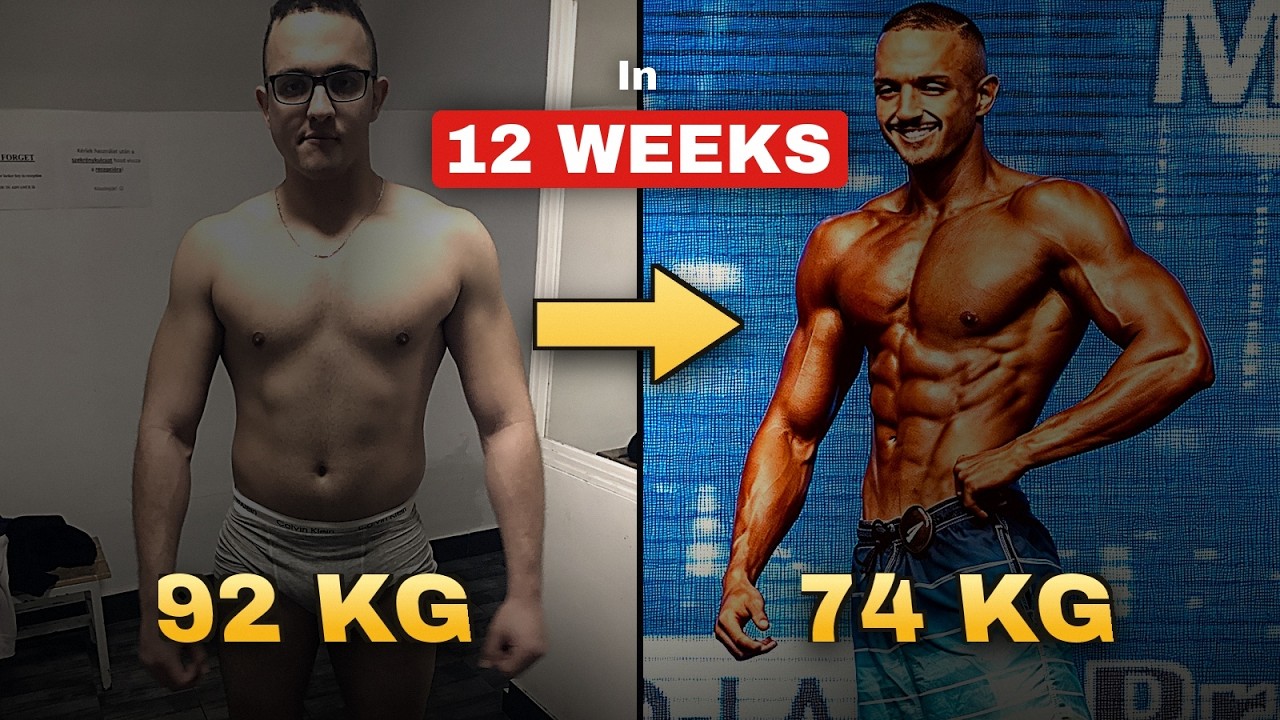
I lost 45 lbs, and I never got it back. In this article, I am going to give you the full blueprint, for free. I have been coaching people for more than twelve years, and I have worked with more than 300 of them. So grab a notebook, because this is the structure I used myself, together with the mistakes I made along the way.
It is a lot of information, so here is how it is organised. First, the myth that held me back. Then my weekly calorie structure. Then my training cycle, the gut work that finally made the weight stay off, my recovery tools, and my night and morning routines.
The myth: eat big to get big
One of the biggest misconceptions in fitness is that you need to eat big to get big. So people eat a lot of calories. But nobody stresses enough that those calories have to be healthy ones.
Eating processed foods, cereals, and drinking two or three litres of milk is not the right way. You might look good at the end of the day, but inside you could be suffering. And your skin will show exactly what is going on in there.
So the first thing I had to do was go into a calorie deficit. That is what conventional science tells us: to lose fat and bring your muscles out for good, you need a deficit. But the way most people do it is the problem.
The biggest deficit mistake: staying there too long
The biggest problem I see is that people stay in a deficit for far too long. In doing so, they fry their metabolism completely.
Here is what I did instead. Two days a week were refeed days, and five days were deficit days.
**What is a refeed day?** It is a day when you raise your calories by about 30 to 35%, with the extra coming mainly from carbohydrates. You do not raise your protein. You raise your carbs, because that is what keeps the volume in your muscles.
**The deficit days are not all the same.** If your calories drop a little more each day, your body does not get used to one fixed number, and you can see more clearly how it responds. Many people lose strength and muscle while they cut, so I wanted to be careful about that.
My exact week
I did this in a natural way, which takes about twice as long as it does for someone using steroids or peptides. That is fine with me. I did it for longevity. I want to feel good, have a better relationship with myself, and be healthy, because looking good does not always mean you are healthy.
This is what my week looked like:
Monday: 2,200 calories. Tuesday: 2,100 calories. Wednesday: 2,800 calories (refeed). Thursday: 2,000 calories. Friday: 1,900 calories. Saturday: 1,800 calories. Sunday: 3,000 calories (refeed).
As you can see, the deficit days step down by about 100 calories each day. That helps you perform in the gym, feel good, and avoid constant hunger, because the changes are small.
I also made sure that all of those 1,900 and 1,800 calories came from high-quality food. As you know, I do not eat processed food. Real food filled me up. I did not drink my calories, and I did not lean on protein shakes to fill the gaps.
Keep protein high, play with the carbs
When you are losing fat, it is very important to keep your protein intake high. On my deficit days, most of my calories came from protein, fat and fibre. I adjusted my carbohydrates up and down, because that is how I created the deficit and the surplus. Carbs are a great source of energy.
Anyone who tells you not to eat carbs is not giving you the right approach. But we live on social media, where there are hundreds of different opinions. What matters is that you find something you can apply and that you feel comfortable with. Copying other people will not help you.
How I adjusted over time
I held that weekly structure for one month. In month two, I reduced most of the deficit days by 50 calories. Every month after that, I reduced them by another 50 to 100 calories, depending on how I felt.
I measured everything, and I paid very close attention to my performance in the gym. The moment I noticed I was losing strength, I raised my calories. I did not want to lose that strength. That is why I built more muscle while I was losing fat.
There is a funny irony here. When you lose weight the right way, you tend to look bigger. And if you are losing fat, keep an eye on your vascularity. If you are losing fat and you cannot see your veins, something is not right. Your veins are one of the first signs that your blood is circulating well and that you are healthy.
My training: cycles, deloads and rest
Alongside the calorie structure, I trained in cycles. A cycle was two months of four to five sessions a week, each lasting 45 minutes to an hour. I never went beyond that. Your body is not meant to train for two hours every day.
We are productive and disciplined. We have businesses and families to take care of, and we have a lot of responsibility. We do not want to spend two hours a day in the gym. There is more to life than that.
After two months of very consistent training, I added a **deload week**. In a deload week, I cut all my heavy weights in half and focused on high repetitions, stretching and mobility. It is very important, and I will explain why below.
After that, I added a week with no weightlifting at all. I cycled through these phases on and off for 12 months. That is the reason I am still muscular today, at 200 lb, and in much better shape than when I was lighter. It tells you there was a lot of muscle retention during the process.
Why less training can be better
I built the cycles this way because the less you train, within reason, the better it is for your body. I started to put recovery first. That lets your body, including your nervous system, rest.
If you go for three, four, five, six months of training four to five times a week with no breaks, you are going to get tired. You build muscle while you recover. You build muscle while you sleep. If you do not prioritise recovery, you will not see the results you want, because you will have worn out your metabolism.
The crucial part: your gut
This next point is the crucial one when it comes to losing fat and not gaining it back. It has to do with your stomach and your gut.
When I cut weight in the past, I had brain fog. I could not sleep well, and I woke up in the middle of the night. I had crashes at 2 p.m. and not much energy. I was putting in time, money and effort, and the results did not show my investment. So I started asking why I was not feeling great.
I dug deeper. I did a blood test, and the doctor told me my results were amazing. But I was not feeling great. That was when I understood that doctors are there to tell you whether you are sick. They are not there to tell you how to optimise your everyday life. So I had to become my own doctor.
I did the research and listened to hundreds of hours of podcasts about gut health. That is how I came to see the gut as your second heart. I started to select every single thing that goes into my body: food, drinks, supplements, everything I could think of. If you are a Ferrari, you put premium fuel in the Ferrari. It was a kind of self-image reflection, and it made sense to me.
I paid attention to where my food and vegetables came from. They were unprocessed and free of chemicals, and I noticed big changes. But I was still bloated. That is when I understood again that every metabolism is different.
Every metabolism is different
Take two men, Bob and Billy. Bob eats potatoes and has a great response. Billy does not respond well to them. The conclusion is that Bob's gut absorbs potatoes better than Billy's. So Billy needs to look for other sources of carbohydrates that fit his metabolism.
This is where I developed my own process of elimination. I took a photo before and after every meal. I noted whether I became bloated, and how my energy felt through the day. I did not drink coffee after noon, because coffee borrows energy, and I could see the effect on my sleep and on my numbers like VO2 max and HRV.
I went through every food in detail, including the meat. I bought meat from different butchers and vegetables from different shops, until I found the sources that fit my metabolism. That is why a customised approach matters. You cannot copy other people, because each metabolism is different.
The gut and the domino effect
The gut is responsible for so much in your body. It works like a domino effect. If your gut is inflamed and you do not absorb your food properly, that affects your recovery. That affects your sleep, which affects your performance, which affects your confidence, which affects your productivity.
For me, this is what actually helped me keep the weight off. As soon as I ate something that did not suit me, I noticed water retention. And I will say this: most of the people out there are not fat. What they have is the consequence of food full of chemicals and ingredients that their bodies cannot process, which leads to higher water retention. We want to avoid that completely.
Recovery tools and cardio
On top of everything else, I introduced sauna, cold plunge, stretching, mobility work, yoga and other activities here and there.
For cardio, I did one long session in zone two, and one session where I pushed my body into zone five, so that my body could adapt to different demands. I did my zone two cardio fasted, and for me it was a complete game changer. Fasted cardio lets your body take the time it needs to digest food properly.
I used the sauna after my weightlifting sessions, and I skipped the cold plunge then. I used the cold plunge after finishing cardio. I did a lot of stretching and a lot of mobility. The combination of all of this gave me the body of a healthy 30-year-old man. It did not come from listening to social media. It came from experience and trial and error.
The two hours before bed, and the morning after
The last piece of the blueprint is the two hours before I sleep and the time when I wake up. My night and morning routines are very important.
I cut off food completely two hours before bed. Your stomach and digestive system use a lot of energy to digest food, and I did not want to waste that energy at night. I slept in a cold room with the windows open, on my side, and not on my stomach. When I slept on my stomach, I could not breathe properly and I would wake up with a huge headache.
Some people tape their mouths. For me, I trained my body to breathe through the nose while I sleep. Many people do not know this, but it made a difference. I also made sure that I was hydrating properly.
Putting the package together
When I combined all of this, I was observing my food, I was not overtraining, and I had good morning and night routines. I was hydrating properly. All of this is what kept the 45 lbs off. This is the exact blueprint I used to reach the shape I am in today. Most importantly, I feel comfortable in my own skin.
That matters, because many people deal with body dysmorphia along the way. We always manage to improve by at least 1%. That is the goal, and it is what I want you to focus on, because the list above is a lot of change. Every week, take the chance to get 1% better.
Start here
If you are struggling with your transformation, or you are experiencing the same symptoms I described, you can book a call with me. You can also follow me on Instagram, where I share tips every day.
Get your free 30-day recomp plan here: https://azermahdi.com/
Watch the full video on YouTube: https://www.youtube.com/watch?v=PCor9Wq7W2E
Disclaimer
This article is for general information and education only. It is not medical advice, and it is not a substitute for advice, diagnosis, or treatment from a qualified doctor or other licensed healthcare professional. I am sharing my own experience and what I have seen with my coaching clients. Reading this article does not create a doctor-patient or coach-client relationship.
Bloating, low energy, brain fog, poor sleep, low libido, and constant stress can have many causes, including medical conditions. If you have any health condition, are pregnant, take medication, or have symptoms that are severe or do not go away, speak to your doctor before you change your training, nutrition, supplements, fasting, sauna or cold exposure, breathing practice, or sleep routine. Never ignore or delay professional medical advice because of something you read here. If you think you have a medical emergency, contact your local emergency services right away.
The client stories and results mentioned here are real examples, but they are not guarantees. Results vary from person to person and depend on many factors, including your health, effort, consistency, and circumstances. Supplements, calorie targets, and training programmes are mentioned only to describe what I do and what I have seen, and they are not a recommendation for you personally.
You are fully responsible for your own health decisions and for how you use this information. To the fullest extent permitted by law, Azer Mahdi disclaims liability for any loss, injury, or damage resulting from the use of, or reliance on, this article.