Fitness
How to Lose Your Love Handles for Good (5 Steps in the Right Order)
You cannot spot reduce fat, but you can lose your love handles for good. Here are 5 steps in the right order: smart deficit, calorie cycling, smart training, gut health and a 10 minute walk.
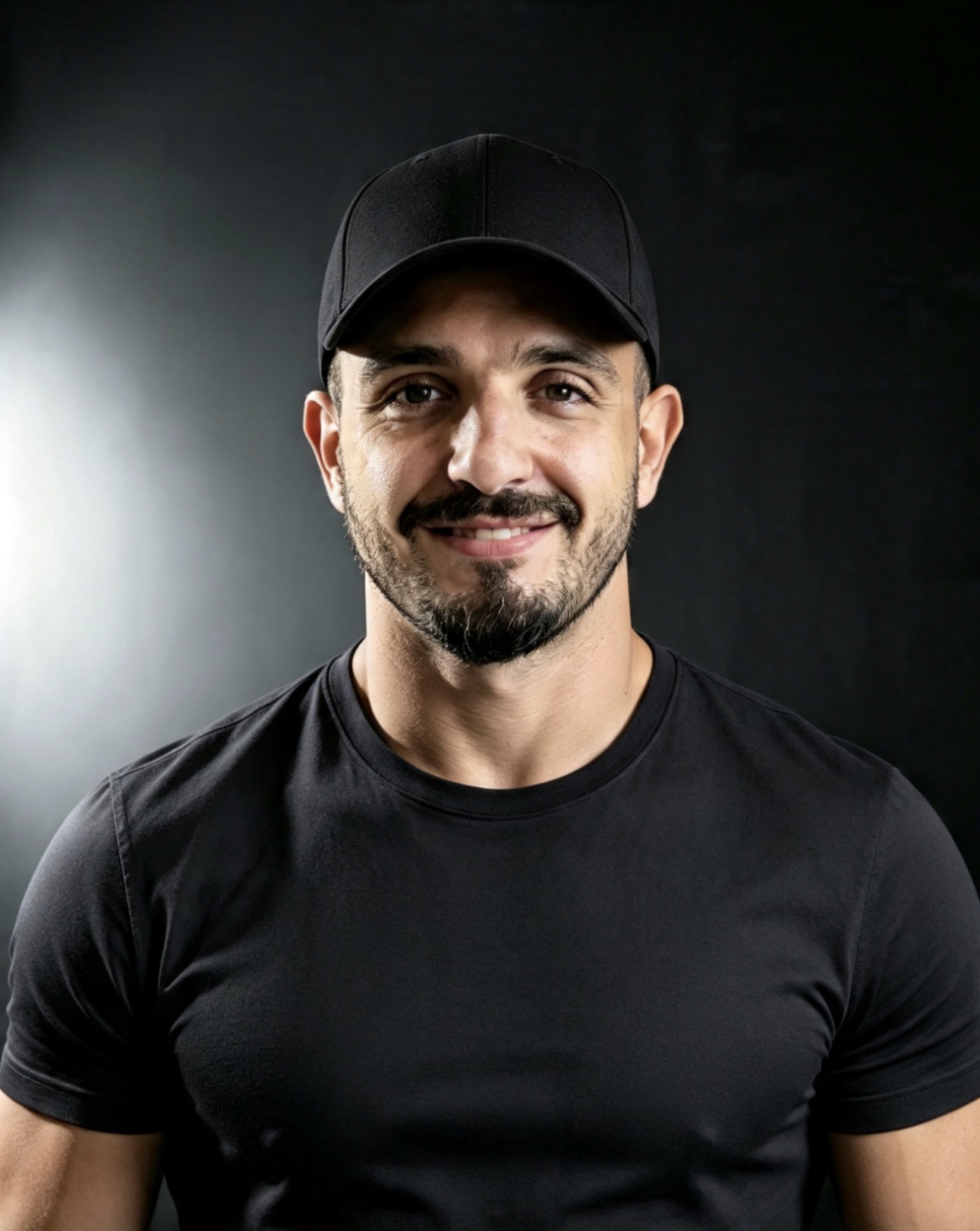
Azer Mahdi
· 14 min read

Watch the full video on YouTube: https://www.youtube.com/watch?v=jLnmL6DjewE
There is a reason why you still have not lost your love handles. And I know it is overwhelming. There is so much information on the internet, and a lot of people are preaching that their method is the ideal one. In this article I want to tell you the truth and what the science says about it, in plain words, and in the right order.
This is the written version of my video. I have been training for almost twelve years and I have been a trainer for ten, so I have seen the same mistakes again and again. If you are a busy man who trains, tries to eat well, and still carries stubborn fat around the waist, read this slowly.
Start here: the short version
If you only have two minutes, here are the five steps in the right order.
1. **Accept the truth first.** You cannot target fat in one area of your body. Love handles go when your whole body loses fat, and your metabolism decides where it comes off first. 2. **Use a small, smart deficit.** Fasting is great for health, but fat loss comes from a calorie deficit. Do not cut calories too low for too long. 3. **Cycle your calories and carbs.** Do not sit in a deficit every single day. Add two higher calorie days each week to refill your energy. 4. **Train smart, not hard.** Avoid overtraining. Work in cycles of two months on, one deload week and one week off. 5. **Fix your gut, your stress and your walking.** Eat real food, lower stress, stop eating two hours before bed, and walk for 10 minutes after every meal.
I am not a doctor. This is my own experience and what I do with my clients. Keep that in mind as you read.
Step 1: You cannot spot reduce fat
Let us keep things clear and simple. You cannot target fat in one specific area of your body. It is humanly impossible and scientifically impossible. No crunch, no side bend and no "love handle workout" will remove fat from your waist only.
Every metabolism is different. The way person A burns fat is different from the way person B burns fat. Person A may lose fat from the legs first and the belly last. Person B may lose it from the belly first and the legs last. Neither person is doing anything wrong. Their bodies are simply built differently.
This is why you cannot go on the internet and copy every workout plan and every diet plan you see. It was not built for you. There is a lot of learning you have to do about your own body to understand how it actually works. That is also why a customised plan, built for you, makes such a big difference. When you stop copying and start testing what works for your body, things finally move.
Step 2: Use a smart deficit (and stop relying on one tool)
One of the biggest misconceptions I see again and again is that people have tried many things and still have nothing to show for it. Let us go through the two most common ones.
### "I do fasting"
Fasting is actually great. It is very beneficial for longevity, for health and for well-being, and I would highly recommend it. It is also good for your brain and your performance.
But is it the best way to lose fat? Not by itself. If you stop fasting, the fat can come back. Fasting is a useful tool, but it is not the only tool. If you want to lose fat, the rule is quite simple: you need to be in a calorie deficit.
### "I cut my calories as low as possible"
I have had people come to me and say, "I have been eating 1,200 calories for seven days a week, very consistently, for two months." In the first week they lost a lot of weight and fat. Then it stopped.
Of course it stopped. If you eat too little for too long, you are shocking your body. A low calorie intake gives you a drop in weight and fat for a couple of weeks, but in the long run it is not beneficial. When you are in a deficit, you are running on your reserves. That uses a lot of your energy and your metabolism gets tired. Your metabolism needs to be cycled properly for you to see the benefit. If you do not cycle it, you stall.
So the smart move is a small deficit, and not a crash diet. In my example, that is a deficit of about 300 to 400 calories on your lower days, not a huge cut.
Step 3: Cycle your calories and carbs
The third mistake is the belief that "I am in a calorie deficit, so I will lose fat everywhere". Not really. It depends on your metabolism and how it operates. But here is a trick that helps with fat loss in general, and especially around the waist: **cycle your carbs and your food.**
Here is what a week can look like as an example:
- **Monday:** about 1,900 calories (a deficit of roughly 300 to 400 calories) - **Tuesday:** 1,800 calories - **Wednesday:** 2,500 calories (high day) - **Thursday:** 1,700 calories - **Friday:** 1,600 calories - **Saturday:** 1,500 calories - **Sunday:** 3,000 calories (high day)
Notice what I did here. I put in two days of higher calories: 2,500 on Wednesday and 3,000 on Sunday. These two days play a major role. They help your body restore its glycogen levels, and they give back the performance and energy your body needs to keep burning fat.
This is what you need to implement on a weekly basis if you want to lose fat. You cannot stay in a deficit for so long. Please remember that these numbers are only an example. Your own numbers depend on your body, your size and your activity, so treat this as an illustration of the idea and not a prescription.
Step 4: Train smart, not hard
The fourth point is overtraining. It works the same way as the calories. I have seen people go to the gym six times a week for nine months straight, very consistent, very disciplined. The problem is that this is outdated information.
There are many videos online telling you to work out every single day, even when you are tired, even at 4 a.m. or 3 a.m. It is a mess of advice about the best time to train and how to stay consistent. What is important is that your lifestyle is different from my lifestyle. Build something that fits your life, so you can show up every single time.
Consistency is great. But consistency should be the reflex of trying to improve yourself, one percent at a time. And you need to learn to train smart, not hard. If you train excessively for a long time, you wear down your metabolism in the same way as a crash diet. The number one thing you need is to recover the muscle fibres that you break down in every workout. If you never give them time to recover, why would you expect to see results?
### The cycle I use with my clients
This is why I use cycles in my own training and with most of my clients:
- **Two months of consistency.** We show up three to four times every week. Four hours a week is all you need. - **One deload week.** You put a lot of pressure on your nervous system, and your nervous system needs to recover properly. In a deload week you either do not lift weights, or you focus on higher reps with lighter loads and short sessions of about 40 to 45 minutes. - **One week off.** I like to call it the holiday week.
Then you repeat. In one year you do this cycle several times, and every cycle should have a specific target. It could be powerlifting, bodybuilding, conditioning or performance. That part is up to you.
If you draw it on a chart, it looks like this. Without recovery, your progress climbs, then flattens. At that stagnation point 99 percent of people either quit or push harder. With cycles, your progress climbs, dips during the deload and the week off, and then climbs again from a higher starting point. Each cycle positions you higher on the chart than the one before.
Recovery is not only the deload. It is also rest, sleep, eating quality food and stretching. A sauna or a cold plunge from time to time can help too. If you skip all of this, do not be surprised when you stop seeing results. Your metabolism got tired of showing up.
Step 5: Fix your gut, your stress and your walking
Now the part that most people get wrong, and the one I care about most. Many people diet for a very long time and do not know what they actually need to eat. The most important organ for your metabolism is your gut. Yes, I said it.
The fitness industry tells you to get a protein shake, get this, get that, buy processed food, get everything from the supermarket. I do not agree. I have been doing this for almost twelve years, and I can tell you from experience that if you eat mostly processed food, you should not expect good results. You might even look good. But you can still experience bloating, lack of focus, energy crashes and insomnia, and you may not even perform properly in the gym.
Your gut needs to stay healthy. It is sometimes called the second heart of the body, and it is connected to your brain through the vagus nerve. This is backed up by science, even if few people talk about it.
### Stress is the number one enemy
If you eat very well, you buy your food from the butcher and the local market, and you still have symptoms, the likely culprit is stress. I mean cortisol. I mean eight coffees a day. I mean eating while you run, while you work or while you talk, distracted, without chewing properly. I also mean drinking a lot between meals.
Try not to eat when you are angry or feeling a strong emotion. Your body does not absorb food the same way when you are stressed as when you are rested and relaxed. Slow down, chew and swallow properly.
### Stop eating two hours before bed
Stop eating at least two hours before you sleep. Digestion uses a lot of energy, and your body needs time to recover. Give your metabolism that time.
### The 10 minute walk after every meal
If you take only one thing from this article, take this one. Go for a 10 minute walk after every single meal you have during your day.
Your gut needs movement after you eat. If it does not get movement, it uses a lot of your energy, which leads to energy crashes the next day and worse sleep. Your gut works like a domino. If it is not good, it affects your recovery, your performance in the gym and your productivity. And we have a lot of responsibility on our shoulders. We run businesses and many people depend on us, our families and our employees. We cannot afford to be unproductive during the day.
This is why fixing your gut can help you get rid of your love handles and your belly fat, and also help you perform better in every area of your life.
A simple plan for your next 4 weeks
Do not try to change everything on day one. Use this order:
1. **Week 1:** Start the 10 minute walk after every meal. Stop eating two hours before bed. 2. **Week 2:** Replace some processed food with real food. Slow down and chew when you eat. 3. **Week 3:** Set a small deficit and add two higher calorie days to your week. 4. **Week 4:** Look at your training. If you have been training hard for months without a break, plan your deload week.
Frequently asked questions
### Can I lose love handles with a specific exercise?
No. You cannot target fat in one area. Fat comes off the whole body, and where it comes off first depends on your own metabolism.
### Is fasting the best way to lose fat?
Fasting is great for longevity, your brain and general health, but it is not the only tool. For fat loss, you need to be in a calorie deficit. If you stop fasting and your habits do not change, fat can come back.
### How low should I cut my calories?
Not too low, and not for too long. Eating 1,200 calories seven days a week can work for a couple of weeks and then stall. A small deficit with higher calorie days gives your metabolism room to work.
### How often should I train?
Three to four times a week is enough for most of my clients, about four hours in total. Work in cycles of two months on, one deload week and one week off.
### Why does my gut matter for fat loss?
Your gut is connected to your brain and affects your energy, sleep, recovery and stress. If your gut is not working well, your training and your fat loss suffer too.
### How long should I walk after meals?
Ten minutes after every meal is the target I give my clients.
Common mistakes to avoid
- Trying to spot reduce fat with one exercise. - Copying a workout or diet plan that was not built for your body. - Relying only on fasting and expecting it to do everything. - Eating very low calories every day for months. - Training six days a week with no deload and no time off. - Eating processed food and ignoring bloating, brain fog and energy crashes. - Eating while stressed, distracted or angry. - Eating right before bed.
Your next step
You do not need to do all five steps at once. Start with the 10 minute walk after your next meal. Then add the next step the week after. Small steps in the right order beat a perfect plan that you drop after ten days.
If you want the whole system laid out for you, I put it into a free plan. It is the same approach I use with my clients, and it is built around fixing the gut first and then recomposing your body.
Ready to take the next step?
Start with the free 30-day recomp plan, and if you would rather talk through your own situation, book a call with me and we will look at it together.
Get your free 30-day recomp plan here: https://welcome.ens.azermahdi.com/free-plan?utm_source=blog&utm_medium=article&utm_content=how-to-lose-your-love-handles-for-good
Disclaimer
This article is for general information and education only. It is not medical advice, and it is not a substitute for advice, diagnosis, or treatment from a qualified doctor or other licensed healthcare professional. I am sharing my own experience and what I have seen with my coaching clients. Reading this article does not create a doctor-patient or coach-client relationship.
Fat loss, digestive symptoms, low energy, poor sleep, and unexplained changes in your body can have many causes, including medical conditions. If you have any health condition, are pregnant, take medication, or have symptoms that are severe or do not go away, speak to your doctor before you change your diet, calorie intake, fasting, training, or recovery routine. Never ignore or delay professional medical advice because of something you read here. The calorie numbers in this article are examples only and are not a recommendation for you personally. If you think you have a medical emergency, contact your local emergency services right away.
The client stories and results mentioned here are real examples, but they are not guarantees. Results vary from person to person and depend on many factors, including your health, effort, consistency, and circumstances.
You are fully responsible for your own health decisions and for how you use this information. To the fullest extent permitted by law, Azer Mahdi disclaims liability for any loss, injury, or damage resulting from the use of, or reliance on, this article.