Fitness
I Bulked to 110 kg and Regretted It: What a Dirty Bulk Really Costs
Three years of eating junk to get bigger left me with bad sleep, brain fog and hair loss. Here is what a dirty bulk really does, and the sleep, food and recovery habits that fixed it.
Azer Mahdi
· 12 min read
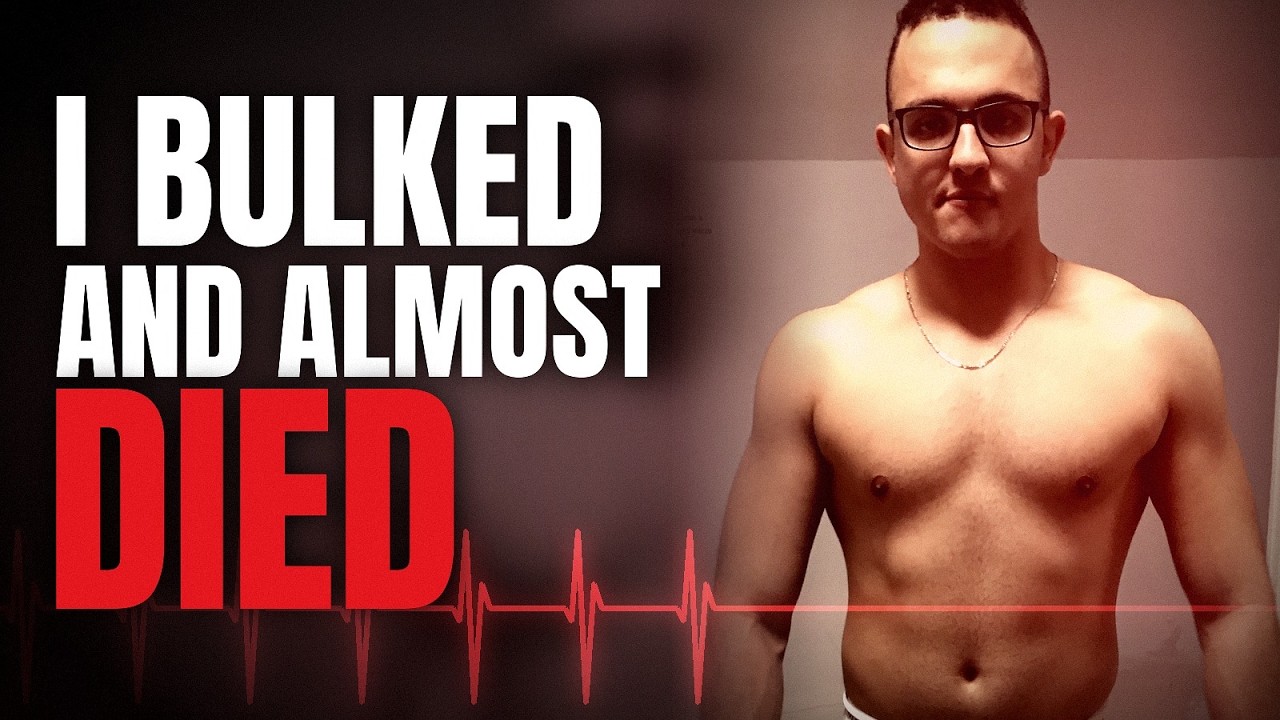
Watch the full video on YouTube: https://www.youtube.com/watch?v=cRr1V37daAY
I bulked up to 110 kg, and in the end, I regretted it. I believed that if I wanted to become bigger, more muscular and more jacked, I had to eat a huge amount of food. I thought it was the only way. That is one of the biggest misconceptions in the fitness industry, and it was one of the biggest mistakes of my life.
I did what is called a dirty bulk. In this article, I want to explain what that cost me, what I learned from it, and what I changed to feel healthy again.
What a dirty bulk looks like
A lot of people focus on what their aesthetics will look like. Very few pay attention to what is happening inside the body.
For three years, all I did was eat junk food. I wanted to get bigger, and bigger, and bigger. Then I planned to cut the weight down and show off my aesthetics at the end.
That is the plan most people follow. It sounds logical, and the internet tells you it works. But it was during this time that I felt the worst I have ever felt in my whole life.
When "doing everything right" feels terrible
I asked myself how this was possible. I was doing exactly what everyone on the internet told me to do, and I felt awful.
My sleep was poor. I had brain fog. I could not focus. I woke up in the middle of the night. I did not feel healthy at all. It bothered me, because for a long time I believed that being jacked meant being healthy. I assumed that the people who looked so healthy online felt the way I wanted to feel. But I was not feeling that way, and I did not understand why.
I went to get my blood tests done. The results were average. Everything seemed fine. But I quickly understood that doctors are there to tell you whether you are sick. They are not there to help you optimise your health. They could not answer most of my questions, and the situation felt unclear. Why was I feeling like this, when it was not supposed to be that way?
Going down the research rabbit hole
I decided to dig deeper. I read research studies and watched many hours of podcasts, trying to find out what was going on in my body.
That is how I reached my conclusion: the gut is one of the most important parts of your body. I call it the second heart, where much of your nervous system is located. The state you are in while you eat matters a lot. And it all starts with the food itself.
Step 1: The process of elimination
The first thing I did was run a process of elimination. I worked out which foods were best for me, and which ones helped me absorb my food better.
I realised I was eating very healthy food: salmon, steak, rice, broccoli and so on. Yet I did not get the results others got. That is when I understood that the state you are in while eating matters.
If you are stressed, and stress is our number one enemy, your health is affected in a completely different way. At this stage, I also started losing my hair. I lost most of it. It is now growing back, after a couple of years of paying attention to my health and my gut.
The gut works like a domino effect. It affects how you absorb food. That affects how you recover, which affects your sleep, which affects your confidence and your performance in the gym. Not many people talk about this.
Step 2: Eat without distractions
When I finished the food part, I had to fix recovery. I realised that I needed to separate parts of my day and set aside specific times just for eating.
I did not watch TV. I did not scroll on my phone. I did not take phone calls. When I sat down to eat, I just ate, and I did not stress my mind with anything else.
That opened another door for me, a Pandora's box, as I like to call it. With my food in better shape, I could start tackling recovery. This is where things really began to change, and where I began to feel better.
Step 3: Put sleep first
I began prioritising my sleep. That meant learning to say no to people. I did not want to go out as much, because I needed seven to eight hours of sleep every night.
Here is what I did.
**Darkness.** I closed the curtains so that no light came into the room.
**Cold air.** I opened all the windows, even in winter. I needed an extremely cold room to sleep better.
**Sleeping position.** This played a major role in my recovery. If you sleep face down, on your stomach, you may not breathe properly. In my case, I felt it was suffocating me, and my brain was not getting enough oxygen. I was waking up with headaches. When I changed my position, the morning headaches disappeared.
**The two-hour rule.** I stopped eating two hours before bed. If I am going to sleep at 11 p.m., I finish eating by 9 p.m. The digestive system uses a lot of energy to absorb food, and I want my body in a good state to rest and digest.
**A ten-minute walk after meals.** One of the most powerful things that affected my sleep was a ten-minute walk after every meal. Believe it or not, ten minutes is enough to speed up digestion and help your body move into rest and digest.
**A hot shower before bed.** When you sleep, your body heals itself. A hot shower is a cue that tells your body it is about to sleep. It helps slow the metabolism and shift into sleep mode.
Step 4: Do not neglect cardio
Another thing I added was cardio. It made me feel better, and less heavy, as if my heart no longer had to work so hard.
People neglect cardio. Your VO2 max is one of the first indicators of your longevity. If you ignore it, the rest suffers. Blood and oxygen transport around your body will not be as good, so blood will not reach the muscles you need it to. It will not do the work of repairing the muscle tissue you break down in your workouts.
That was a big change for me. Once I gave my body the ability to recover properly from intense training, with longevity and VO2 max exercises, everything ran more smoothly. My blood circulation was good. If you have been lifting weights for a long time, you need to start doing cardio as well.
Step 5: Stop borrowing energy
One of the biggest changes in my behaviour was that I stopped constantly borrowing energy. I was drinking coffee all day long.
I have heard people online suggest that you should drink large amounts of coffee. In my view, that kind of advice can hurt your life. Drinking six cups of coffee a day is taxing on your nervous system. You do not want to borrow energy constantly.
I stopped drinking coffee after 2 p.m. every day. My body felt good, and my sleep improved, because I was not over-caffeinated throughout the day. I tracked it properly, using the monitors we have today. When I cut coffee at 2 p.m., I slept better that same night.
Feeling good versus looking good
So feeling good and looking good are two different things. That is why I had to tackle this problem.
The habits I have described are what I have paid attention to throughout my career, especially in the last couple of years: what I do before I sleep, the state I am in when I eat, and, most importantly, taking care of my gut. And of course, hydrate properly. If you do not drink enough water, do not ask why you feel the way you do.
Why the internet gets this wrong
The internet rewards the picture, not the person. A before-and-after photo is easy to share. A restless night, a foggy morning or a hormone panel is not. So the loudest advice usually comes from what looks impressive, and not from what feels good to live in.
When I was bulking, I followed that advice faithfully. I trusted people who looked the part. It did not occur to me that someone could look healthy on camera and feel terrible when the camera was off. I assumed that they felt the same way I wanted to feel, and that I just had not found the right trick yet.
That assumption cost me years. If I could change one thing, I would ask a different question at the start: not "how do I look?" but "how do I feel when I wake up?" The answer to that question tells you far more about your health than any mirror.
The recovery was slow, and that is fine
I want to be honest about the timeline. None of this happened in a week. My sleep improved first. Then my energy became steadier, and my focus came back. My hair, which I had lost so much of, took a couple of years to start growing back. Change like this takes patience.
What helped was making each habit small enough that I could keep it. A ten-minute walk is easy. Closing the curtains is easy. Stopping coffee at 2 p.m. is easy. None of them feels like a big sacrifice, but together they changed how I felt every day.
If you feel discouraged, remember that you did not damage your health in a day, and you will not repair it in a day either. Choose one habit this week and do it every day. Next week, add another.
What I would tell my younger self
If I could talk to my younger self, I would say three things.
First, do not confuse size with health. Being big and muscular is not the same as being well. You can carry the biggest physique in the gym and still feel exhausted every morning.
Second, do not trust a plan just because it is popular. A dirty bulk is popular because it works in the short term for aesthetics. It does not tell you what is happening to your sleep, your digestion, your energy or your hormones.
Third, listen to your symptoms. Poor sleep, brain fog, a crash in the afternoon and a hard time focusing are your body's way of telling you that something needs to change. They are not a normal price to pay for a good physique.
A simple plan to feel better
If you are struggling with brain fog, a 2 p.m. crash, low energy, poor focus or poor sleep, here is a simple plan.
Eat your meals without distractions. Walk for ten minutes after each meal. Stop eating two hours before bed. Close the curtains, open the window, and avoid sleeping face down. Take a hot shower before bed. Add some cardio to your week. Stop drinking coffee after 2 p.m. Hydrate properly.
Master your morning routine, and master your evening routine. Those are the two factors that decide whether you feel good or only look good.
Start here
If you are struggling with any of this, there is a free 30-day recomp plan through the link below. Go and check it out. And if you need a little guidance, you can book a call with me, and we can see how I can help.
Get your free 30-day recomp plan here: https://azermahdi.com/
Watch the full video on YouTube: https://www.youtube.com/watch?v=cRr1V37daAY
Disclaimer
This article is for general information and education only. It is not medical advice, and it is not a substitute for advice, diagnosis, or treatment from a qualified doctor or other licensed healthcare professional. I am sharing my own experience and what I have seen with my coaching clients. Reading this article does not create a doctor-patient or coach-client relationship.
Bloating, low energy, brain fog, poor sleep, low libido, and constant stress can have many causes, including medical conditions. If you have any health condition, are pregnant, take medication, or have symptoms that are severe or do not go away, speak to your doctor before you change your training, nutrition, supplements, fasting, sauna or cold exposure, breathing practice, or sleep routine. Never ignore or delay professional medical advice because of something you read here. If you think you have a medical emergency, contact your local emergency services right away.
The client stories and results mentioned here are real examples, but they are not guarantees. Results vary from person to person and depend on many factors, including your health, effort, consistency, and circumstances. Supplements, calorie targets, and training programmes are mentioned only to describe what I do and what I have seen, and they are not a recommendation for you personally.
You are fully responsible for your own health decisions and for how you use this information. To the fullest extent permitted by law, Azer Mahdi disclaims liability for any loss, injury, or damage resulting from the use of, or reliance on, this article.